
Bridging handheld and console worlds in retro gaming Japan
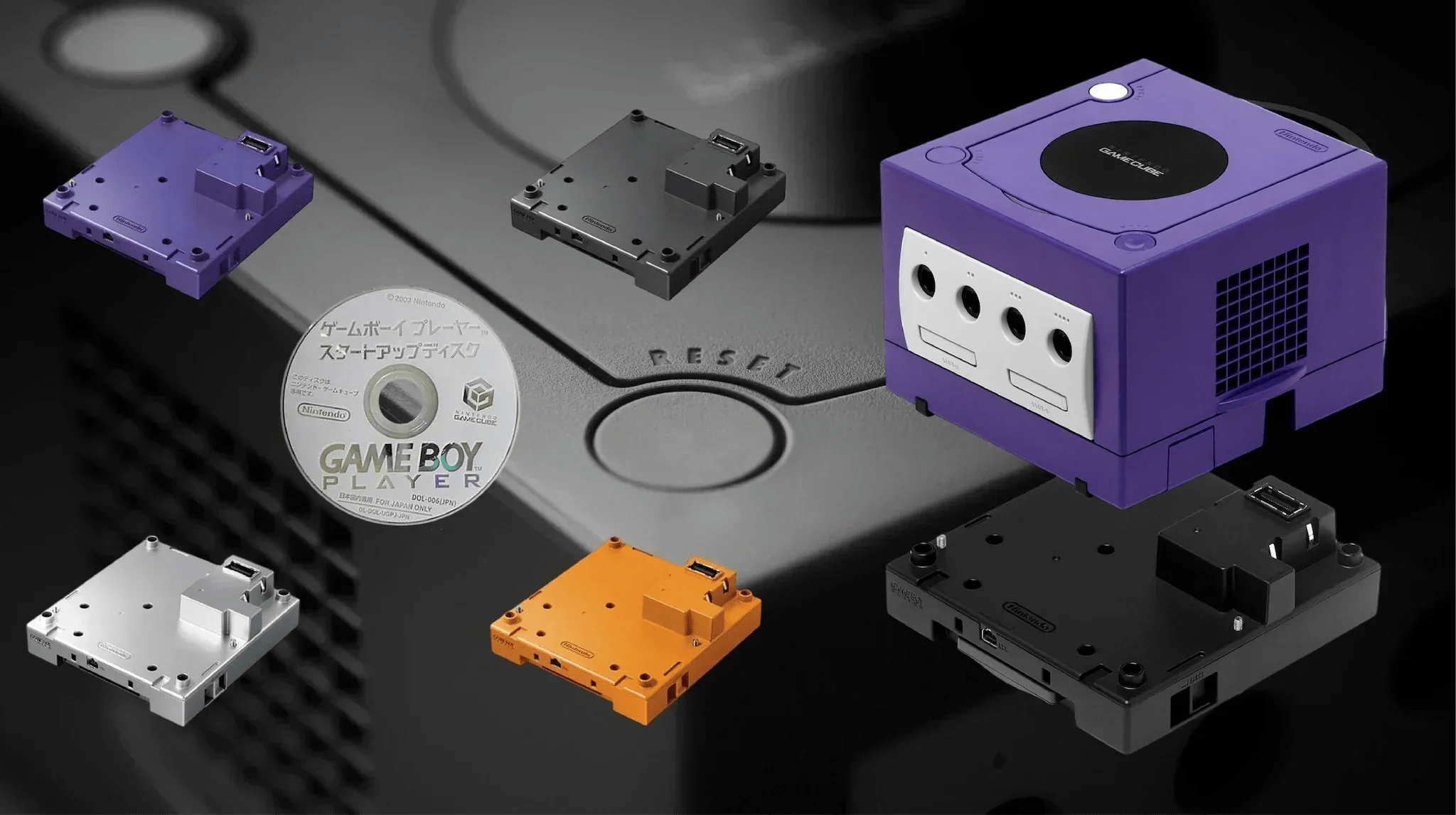
In 2003, Nintendo releases the Game Boy Player, an official add-on that connects directly to the bottom of the GameCube. It allows Game Boy, Game Boy Color, and Game Boy Advance games to run on television through the console’s power. Two decades later, this small accessory becomes a collector favorite and an enduring part of retro video game console culture.
A design built for collectors and players
The Game Boy Player shares the GameCube’s compact form, color palette, and mechanical precision. Its symmetrical fit and matte finish showcase Nintendo’s attention to design harmony. Collectors appreciate how this accessory turns the GameCube into both a display piece and a playable archive, representing a key moment in the evolution of Japanese retro accessories.

The Game Boy Player unites handheld and console eras, a perfect example of retro gaming innovation from Japan.
Japan-exclusive editions and packaging differences
The Japanese retail version stands out for its refined packaging and consistent purple and silver themes. Local editions often feature alternate branding, inserts, and printed materials not included in Western releases. These subtle variations make Japanese units especially popular among collectors of Accessories and Retro Gaming gear.
Functional innovation and enduring appeal
Behind its minimalist design lies thoughtful engineering. The Game Boy Player uses the GameCube’s processing power to display handheld titles with clarity and minimal lag. Its link port support enables multiplayer sessions between handheld devices, offering a nostalgic yet functional experience.
Even today, the accessory remains one of the few official products that physically connect two generations of Nintendo systems. It bridges eras of play and continues to attract enthusiasts of classic gaming systems who appreciate versatility and authenticity.
Collecting tips and accessory care
Finding a complete unit with the original startup disc, manual, and mounting screws is essential. Many imported sets arrive incomplete, which reduces value and usability. RetroPixl highlights complete Japanese editions in the Accessories and Collectors Collection categories to help enthusiasts identify fully preserved examples.

Complete sets with the startup disc remain highly valued among fans of retro accessories.
Cultural legacy
In Japan, the Game Boy Player symbolizes the creative bridge between portable and home gaming. It represents Nintendo’s willingness to experiment and expand player experiences while maintaining design integrity. Its enduring appeal reminds collectors why authentic retro gaming accessories continues to inspire admiration worldwide.
Legacy for collectors
The Game Boy Player captures the best of both worlds, merging handheld nostalgia with console innovation. Compact, functional, and beautifully made, it stands as one of Nintendo’s most iconic accessories and a must-own piece in any Japanese retro gaming collection.
Share:
Launch of the “Find It For Me” Service
How RetroPixl Sources Rare Consoles (Behind the Scenes)