
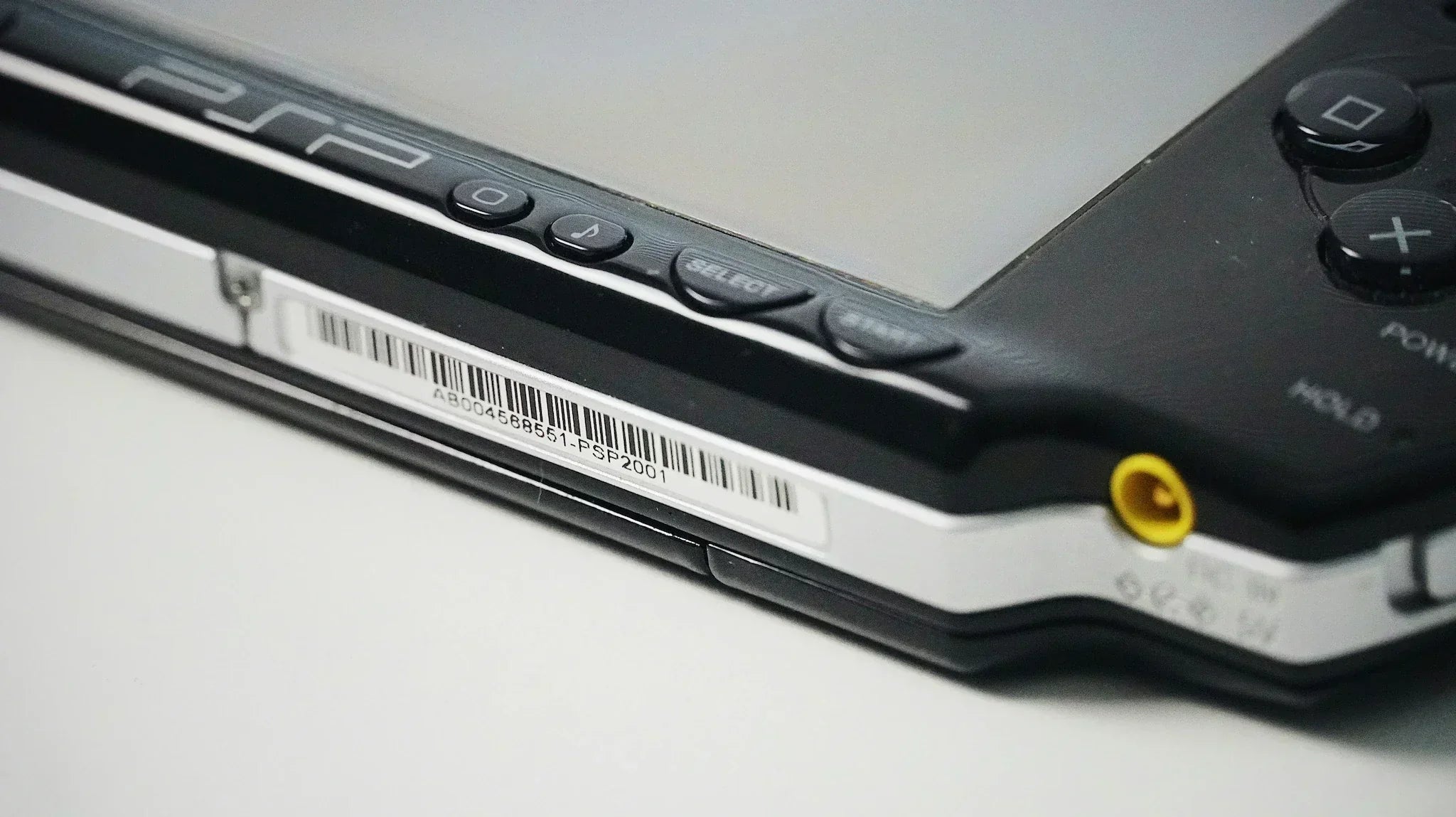
From portable innovation to collector legacy
When Sony entered the handheld market with the PlayStation Portable (PSP) in 2004, it redefined what gaming on the go could look like. Sleek, powerful, and backed by the PlayStation brand, it brought console-quality visuals to a compact form. The PSP and its successor, the PlayStation Vita, now stand as milestones in handheld history, symbols of ambition and artistry that continue to inspire collectors and modders alike.

Sony Playstation Portable (PSP 1000)
The golden years of portable PlayStation
The PSP’s arrival was revolutionary. It introduced widescreen gaming to handhelds, supported digital media playback, and helped define the early 2000s gaming lifestyle. The system became a cultural touchstone, especially in Japan, where limited editions and exclusive colors turned every release into an event. From the shimmering “Ceramic White” PSP-1000 to the ultra-rare “Final Fantasy VII Crisis Core” edition, collectors still chase these pristine models today.
By contrast, the PlayStation Vita represented both refinement and risk. Its OLED display remains one of the best ever used in a handheld console, while its form factor—light, balanced, and futuristic, still looks modern. Yet despite its elegance, the Vita struggled commercially, which only fueled its mystique among collectors. Owning a mint or sealed Vita today feels like owning a piece of “what could have been.”

Sony Playstation Portable (PSP 2000)
Collector focus: rarity through refinement
In 2025, the PlayStation handheld ecosystem enjoys a renewed spotlight within the Collectors Collection and Retro Gaming Collection. The resurgence is driven by enthusiasts seeking brand new and sealed (S-grade) and mint (A-grade) consoles, often imported directly from Japan. Many units in circulation retain their original packaging, manuals, and protective films, a testament to how carefully Japanese collectors preserved their gear.

Sony Playstation Portable Go (PSP Go)
Some of the most coveted handhelds include the “Monster Hunter” and “Metal Gear Solid: Peace Walker” PSP editions, as well as Japan-exclusive Vita colors like “Neon Orange” and “Aqua Blue.” Condition and completeness play a massive role in pricing, and boxed sets with matching serials have become particularly desirable among serious collectors.
Accessories that complete the experience
Beyond the consoles themselves, accessories have become an integral part of the PlayStation handheld legacy. Custom charging docks, carrying pouches, and component cables once considered secondary are now prized by collectors for their originality and compatibility. Items like the PSP-2000 dock, the official cradle for the PS Vita, and Japanese-exclusive carrying cases are showcased in RetroPixl’s Accessories section, highlighting their continued appeal as functional collectibles.
Display-minded collectors even pair their handhelds with original retail stands or acrylic risers, creating museum-like setups that celebrate the handheld’s elegant design.
The role of modding and restoration
While Retro Refurb™ officially focuses on cleaning and restoration, rather than modification, the growing modding scene surrounding PSPs and Vitas has influenced how collectors view authenticity. Some enthusiasts replace batteries or screens for preservation, while others retrofit units for modern usability. Still, purists argue that untouched, original units, especially those in S- or A-grade condition, represent the truest connection to the PlayStation handheld heritage.
Cultural importance and design philosophy
What makes PlayStation handhelds so timeless is their fusion of industrial design and personal connection. Unlike the chunky, toy-like handhelds of previous generations, Sony’s portables felt aspirational, bridging entertainment and lifestyle. The reflective screen, glossy finishes, and compact buttons created an aesthetic that aged gracefully.
In Japan, portable gaming culture was never just about convenience, it was about expression. Commuters, students, and fans bonded over local wireless sessions on trains and in cafés. This social dimension transformed handheld gaming from a solitary experience into a shared ritual, a phenomenon that today’s collectors remember fondly when displaying their consoles.
A growing appreciation in 2025
The modern retro scene has widened the spotlight on Sony’s handheld lineage. Auction platforms and collector communities are seeing steady price increases for boxed PSPs and early-model Vitas. Even used systems, in great condidion like B-grade, clean, complete, and well-maintained, have gained traction as playable collectibles.
The cultural reevaluation isn’t just nostalgia, it’s recognition. These handhelds bridged two eras: the analog charm of physical cartridges and the dawn of digital media. They represent Sony’s courage to innovate when portability was still dominated by Nintendo.
Legacy for players and collectors
Two decades after its debut, the PlayStation Portable, and its younger sibling, the Vita, remain emblems of creative vision. They capture an era when technology, design, and culture intertwined seamlessly. At RetroPixl, their legacy lives on through curated showcases that celebrate not only the hardware itself but the spirit of gaming it inspired.
For those seeking these icons today, the Collectors Collection, Accessories, and Retro Gaming Collection offer a window into Japan’s golden age of handheld design—where portability met perfection.
Share:
Announcing RetroPixl Drops! A New Way to Play and Collect Japan’s Rarest Consoles
The RetroPixl Rebrand: A New Era Begins