
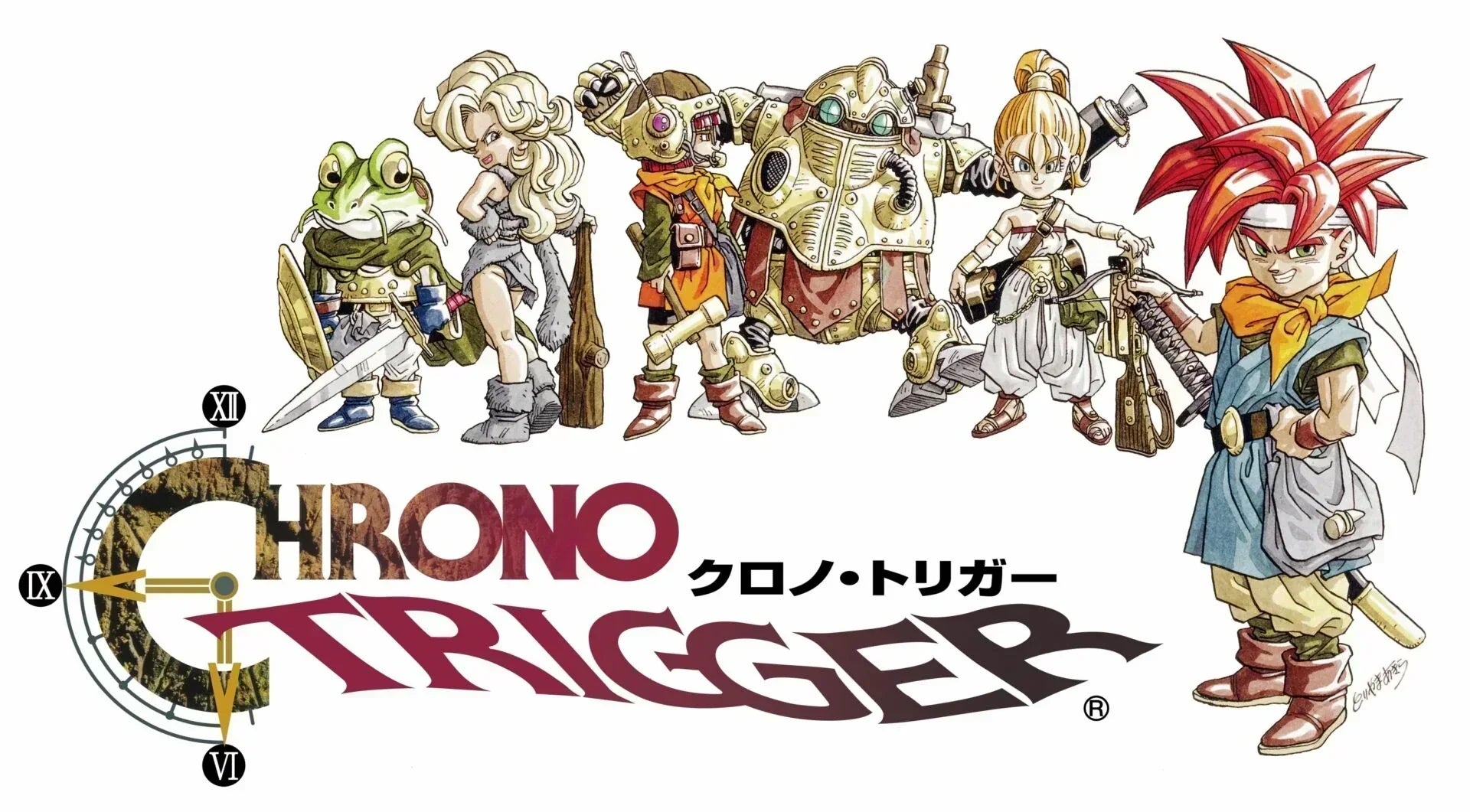
A landmark in Japanese retro gaming
Chrono Trigger stands as one of the most iconic titles in retro gaming history. Released in 1995 for the Super Famicom, it merged imaginative storytelling, revolutionary gameplay, and a dream-team of developers led by Sakaguchi, Horii and Toriyama. Today collectors and fans continue to seek out original Japanese editions for their artistry, condition and emotional impact.
Why it still defines retro gaming excellence
Unlike many RPGs of its era, Chrono Trigger offered multiple endings, seamless combat transitions and breathtaking pixel art that pushed the Super Famicom to its limits. From modern remasters to various re-releases it remains relevant—and the collectible value of the Japanese cartridge edition reflects that enduring legacy. What truly sets this game apart is the enduring quality of its packaging, the minimalist Japanese box design, the soft pastel tones and manual illustrations that reflect Toriyama’s unmistakable style.

The 1995 Super Famicom edition that defined storytelling in retro gaming
The collector’s perspective
Finding a brand new copy of Chrono Trigger is nearly impossible today. Most available copies are complete-in-box at best, often kept in shape by collectors who recognized its value early. The value jump between a typical complete-in-box unit and a truly mint one illustrates just how passionately this title is hunted.
 Akira Toriyama's art for Chrono Trigger
The role of preservation
As interest in retro video game consoles continues to grow, preservation becomes a shared responsibility among collectors. Proper storage, humidity control and protective casing help maintain these historical pieces. We emphasise this philosophy across the Retro Gaming Collection, where authenticity, condition and legacy intersect.
Cross-generation influence
From its Super Famicom roots, Chrono Trigger inspired ports and updates on multiple platforms—yet none match the tactile charm and cultural resonance of the Japanese cartridge release. The experience of opening the box, reading the manual and holding the cartridge remains central to collector appeal. That’s why the title is featured within both the Collectors Collection and Collectibles for fans who value physical history.

Later editions that helped the saga reach new audiences while preserving the original’s spirit.
Why collectors still chase it
Demand for Chrono Trigger continues to rise because it balances emotional storytelling, design excellence and cultural history. Collectors aren’t just buying a cartridge; they are preserving a cultural artifact that represents a milestone in Japanese creative collaboration.
Legacy for collectors
Chrono Trigger’s status isn’t just about rarity—it’s about resonance. The game reminds us why we collect, preserve and celebrate the artistry behind Japanese retro consoles. For anyone passionate about timeless design, emotional storytelling and cultural history, Chrono Trigger stands as the perfect intersection of all three.
To explore consoles on which you can play games from this era, visit the Retro Gaming Collection, the Collectors Collection, or the Collectibles section for more iconic titles that shaped gaming’s golden age.
Share:
RetroPixl 2020 Year in Review
Retro Game Scalping & Reseller Culture