
A handheld innovation that quietly changed everything
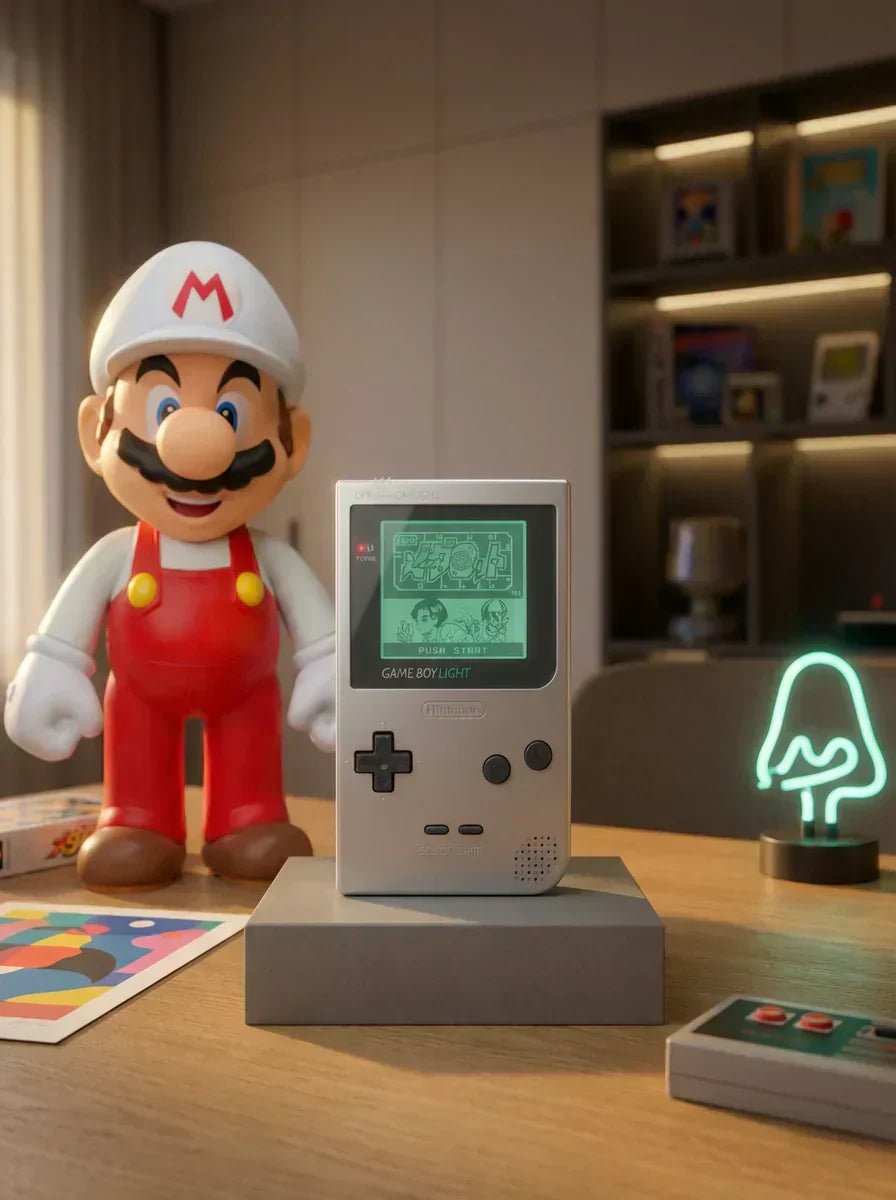
Among Japan’s most fascinating handheld releases, the Nintendo Game Boy Light occupies a uniquely respected space. Introduced exclusively in Japan, this elegant system refines the original monochrome Game Boy formula while solving one of its most persistent limitations: visibility in low-light conditions. Long before backlit screens become standard, the Game Boy Light offers players something that feels almost futuristic for its time.
The brilliance of electroluminescent backlighting
What distinguishes the Game Boy Light is its electroluminescent backlight, a technological leap that dramatically improves screen clarity without sacrificing the system’s minimalist identity. Unlike later LCD solutions, this soft, atmospheric glow preserves the familiar visual texture cherished by retro gaming purists. The result feels both functional and aesthetically restrained.
A Japan-only chapter in Nintendo history
Released solely in the Japanese market, the Game Boy Light immediately earns “insider” status among collectors. Its regional exclusivity, combined with relatively limited production, transforms the console into a sought-after artifact. For many enthusiasts outside Japan, encountering one in pristine condition still feels like discovering a hidden branch of Nintendo’s handheld lineage.
Design subtlety over spectacle
Visually, the Game Boy Light resists flamboyance. Its form remains faithful to the original Game Boy architecture, yet refinements in finish and color variants lend it an understated sophistication. Special editions, particularly the Gold and Silver versions, elevate the console from functional device to display-worthy collectible.
Standard and limited editions

The Game Boy Light is released in finishes that shape its collector hierarchy. The original Silver model reflects Nintendo’s restrained design language, while the iconic Gold edition stands as the most recognizable variant.
Collectors closely track rarer releases, including the Astro Boy edition and the distinct Osamu Tezuka World Shop edition, two separate versions that celebrate Tezuka’s creative universe. Alongside the Pokémon Center limited edition or the Famitsu edition, these variants command strong desirability due to limited distribution and cultural significance.
For collectors, these editions represent moments where Japanese console design and pop culture heritage intersect.
Why collectors prize the Game Boy Light
Collectors value the Game Boy Light for several converging reasons:
• Japan-only availability
• Early backlighting innovation
• Elegant transitional design
• Strong preservation narrative
Condition plays an especially important role. S-grade sealed units represent extreme rarity, while A-grade examples with intact packaging and inserts anchor serious collections. Even well-preserved B-grade complete-in-box units retain substantial desirability when authenticity and presentation remain uncompromised.
Exploring the Retro Gaming Collection, the Collectors Collection, historically aligned Handhelds, carefully curated Accessories, and premium Collectibles reflects the same philosophy embodied by the Game Boy Light itself: preservation, design appreciation, and cultural respect.
Legacy for players and collectors.
The Nintendo Game Boy Light represents more than a hardware revision. It captures a moment when innovation emerges through refinement rather than reinvention. Decades later, its gentle glow continues to symbolize the quiet brilliance of Japanese console design.
Share:
Capcom's 40th Anniversary: Tokyo Expo
Twin Famicom: design meets Disk System innovation