
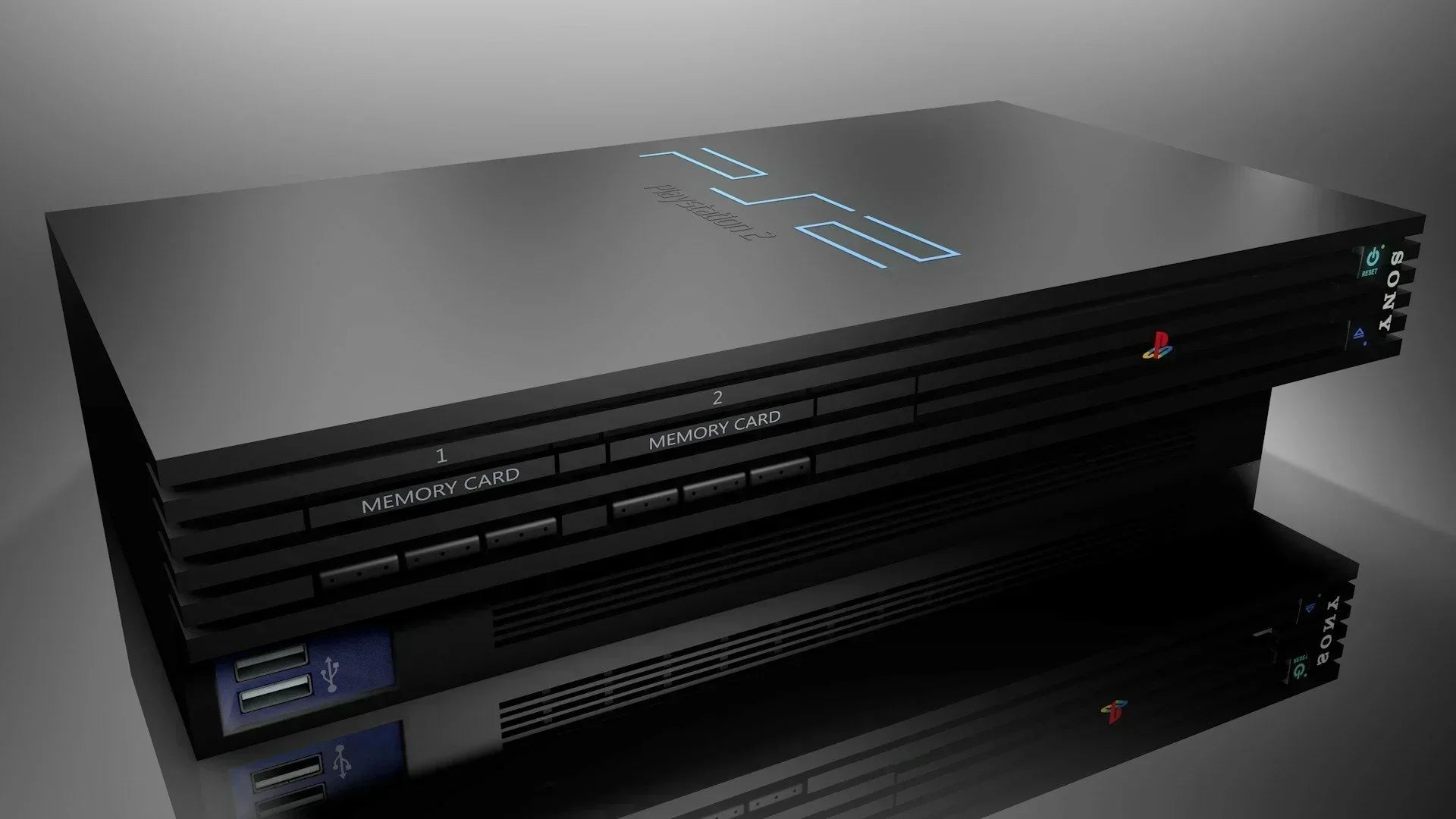
The accessory that bridged players before Wi-Fi took over: A fascinating slice of retro gaming history now prized by collectors.
When you think of the PlayStation 2, you probably recall its legendary catalog of games — from Final Fantasy X to Metal Gear Solid 3. But behind the scenes of that golden era was a small gray accessory that opened a whole new world: the PS2 Network Adapter. Once overlooked, these units have become highly sought-after artifacts in the world of Japanese retro consoles, especially the rare Japan-exclusive editions that defined Sony’s early experiment with online play.
The Role of the Network Adapter in Early Online Play
Before Wi-Fi became the norm, connecting a console to the Internet was an adventure. In 2002, Sony introduced the PlayStation 2 Network Adapter — a compact module that plugged into the back of the fat PS2, offering either Ethernet or dial-up connectivity depending on the model.
For gamers in Japan, this wasn’t just a technical add-on; it was a gateway to pioneering online experiences such as Final Fantasy XI and SOCOM: U.S. Navy SEALs. The adapter also supported the official PlayStation BB Unit, which integrated a hard drive for online data storage — a feature never widely released outside Japan.

Japan’s Exclusive PS2 Network Adapter Models
While Western gamers mainly saw the SCPH-10281 Ethernet version, Japan received several limited editions. Some models bundled with the PlayStation BB Unit, others included customized front panels matching specific console colors such as the Ceramic White PS2 from Sony Style Japan.
The rarest among them were units sold directly through Sony Style Japan’s online store, packaged in distinctive minimalist boxes bearing “For BB Unit Use Only.” These adapters are today classified as rare gaming collectibles, prized for their scarcity and aesthetic harmony with the matching Japanese consoles.
Collectors often hunt for mint, (A-grade) examples — or the ultimate find: brand new and sealed (S-grade) units. A perfect S-grade box still wrapped in Sony’s original plastic seal can command hundreds of dollars in collector markets.

Collectibility & Condition: S-Grade vs A-Grade Units
Condition defines value in the vintage game consoles world, and the PS2 Network Adapter is no exception. Many adapters were sold loose or bundled with consoles, leaving few preserved in their original packaging.
An A-grade complete-in-box unit usually includes the adapter, original cardboard tray, instruction leaflet, and data-transfer disc.
Meanwhile, an S-grade sealed unit remains the holy grail — factory-fresh, untouched since the early 2000s. RetroPixl’s A-Grade Mint consoles and S-Grade Sealed Consoles collections celebrate these pristine finds, highlighting just how rare untouched stock has become.
The Challenge of Finding Authentic Units Today
As retro gaming boomed in the late 2010s, the PS2 Network Adapter quietly climbed collector wish-lists. Authenticity, however, is tricky. Many listings online feature refurbished or region-swapped models — adapters from North America retrofitted with Japanese labels.
To identify genuine Japanese editions, check for “SCPH-10281 (NTSC-J)” on the rear label, verify that screws and shell plastic match the original black-gray tone, and look for the “Sony Computer Entertainment Inc.” engraving (not “Sony Computer Entertainment America”).
Collectors who secure one often store it alongside their rare consoles from Japan — from the PS2 Ceramic White to the limited Midnight Blue variant.
Share:
Sega Dreamcast Limited Variants
Why the Famicom Still Defines Nintendo