

The mind behind Sega’s hardware evolution
The passing of Hideki Sato marks the end of an era in retro gaming history. Over nearly two decades, Sato helps shape the physical identity of Sega hardware from its early home systems to its final console generation. His work spans arcades, early cartridges, 16-bit powerhouses, and the leap into optical media. Few designers leave fingerprints across so many defining machines.
From arcade foundations to home experimentation

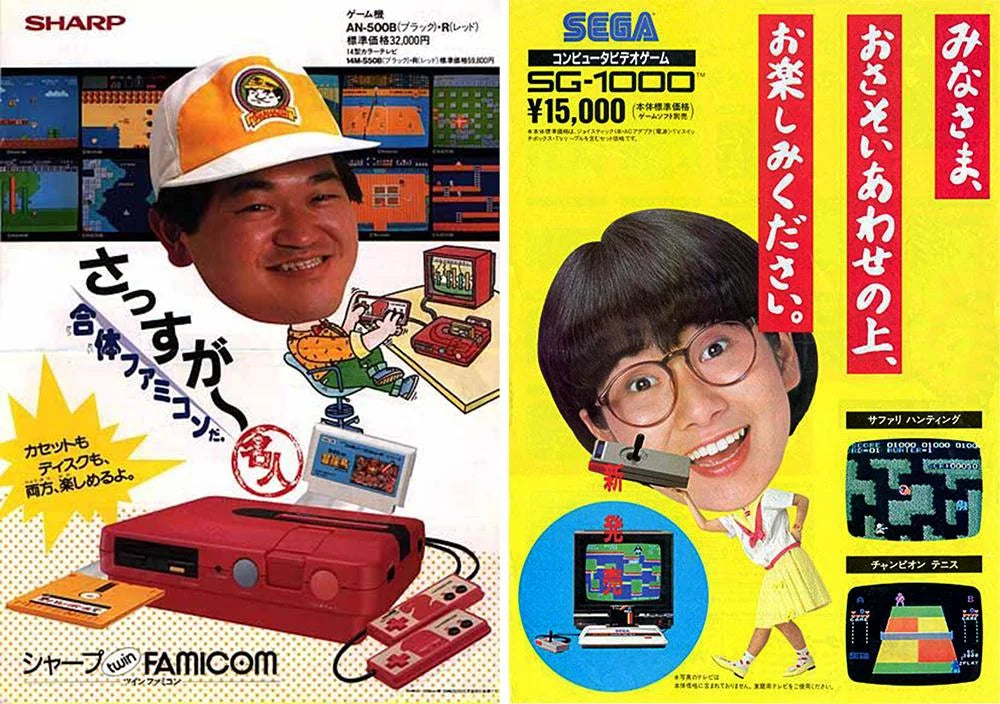
Sega SG-1000
Sato’s influence traces back to Sega’s early arcade and home ambitions. The Sega System 1 arcade platform sets the tone in 1982, establishing technical discipline and visual clarity.
Soon after, Sega enters the home console race with the SG-1000 in 1983. That same year, Sato serves as designer of the SC-3000, a hybrid home computer and console that reflects Sega’s early willingness to experiment. The follow-up SG-1000 II refines the form factor in 1984, signaling iterative confidence.

By 1985, the Sega Mark III, later known internationally as the Master System, introduces sharper lines and a more assertive industrial presence. Sega hardware begins to carry a distinct personality.
The 16-bit statement

Sega Megadrive
In 1988, the Sega Mega Drive arrives. Its angular form and bold typography communicate power and attitude. The console does not try to be neutral. It declares itself. This design language resonates deeply with collectors today and remains foundational within serious Japanese console preservation.
The Mega Drive era cements Sega’s hardware identity. Design is no longer secondary. It becomes brand expression.
Optical ambition and modern form

Sega Saturn
The 1990s push Sato’s vision further. The Sega Saturn (1994) carries weight and symmetry, its circular disc bay centered with intent. It feels engineered yet deliberate in proportion.
Then comes the Sega Dreamcast (1998), Sega’s final home console. Clean, compact, and forward-looking, the Dreamcast reflects a refined minimalism. Its bright shell and balanced layout stand in contrast to the darker industrial tones of previous generations. Even decades later, it feels modern.

Collectors continue to revere these systems not only for their libraries, but for their clarity of design. Many anchor curated displays within the Collectors Collection, while their broader historical impact remains central to the Retro Gaming Collection.
A design language that endured
Across arcade boards, cartridge consoles, and disc-based systems, Sato helps guide Sega through technological shifts without losing visual identity. That consistency is rare. It reflects leadership grounded in both engineering and aesthetics.
Today, historically significant Sega hardware stands proudly among carefully preserved consoles, valued not only for nostalgia, but for design conviction.
Legacy for players and collectors.
Hideki Sato’s legacy stretches from the SG-1000 to the Dreamcast, from early experimentation to global recognition. His work reminds us that consoles are more than devices. They are physical statements of belief in the future. For players and collectors alike, that vision continues to resonate.
Share:
Twin Famicom: design meets Disk System innovation
Neo Geo AES: The Home Arcade Dream