
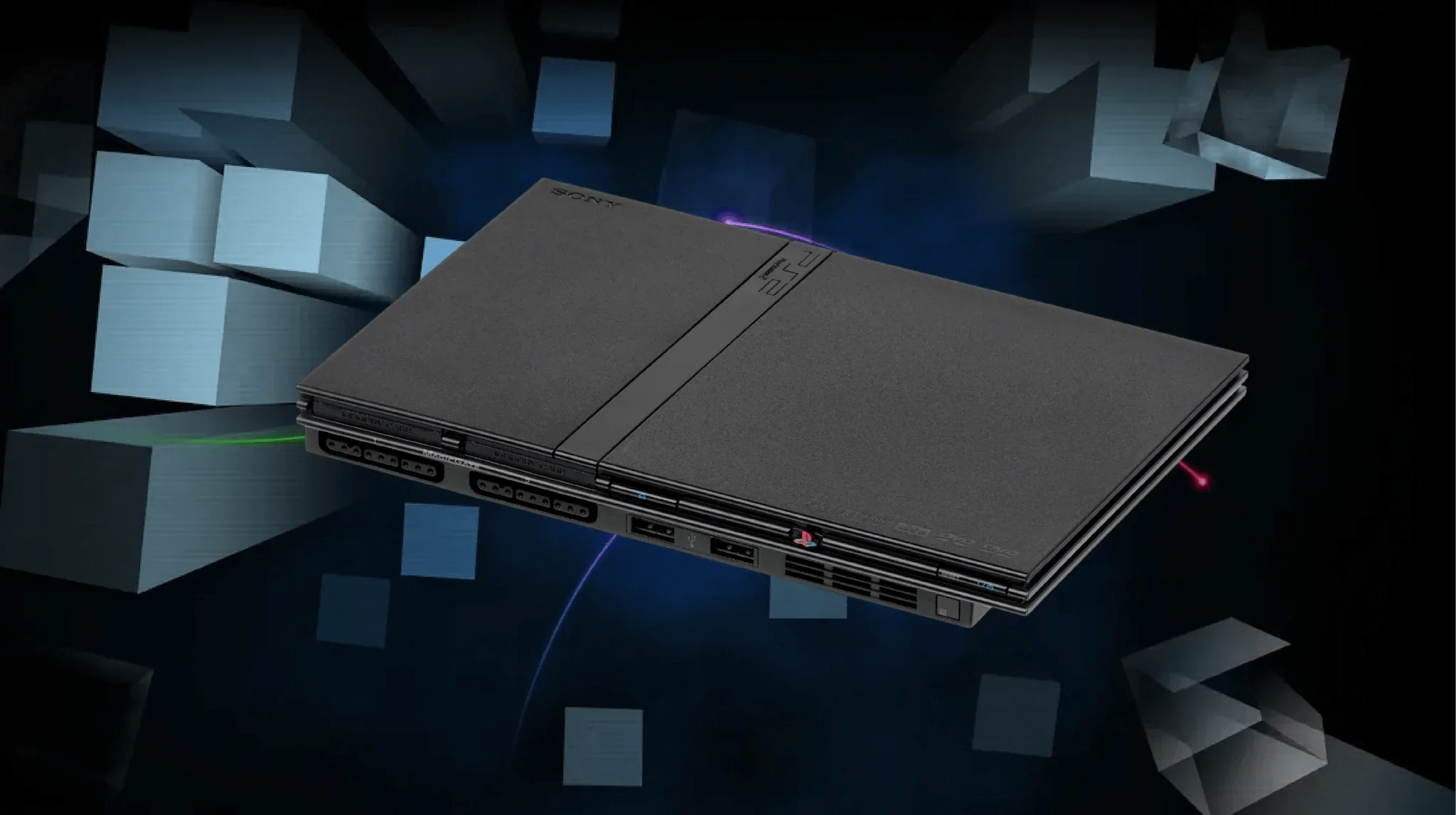
A redesign that defined an era
When Sony unveiled the PlayStation 2 Slim in 2004, it wasn’t simply about making a smaller console. It was about redefining what gaming hardware could represent. In Japan, where living spaces are often compact, the sleeker and quieter version felt designed with everyday life in mind. It captured the country’s preference for simplicity and precision, traits deeply tied to Japanese craftsmanship. For collectors of Retro Gaming systems, the PS2 Slim became more than hardware. It was a statement of balance between form and function.
Compact engineering, massive impact
Sony engineers achieved something remarkable. They created a console nearly half the size of the original PS2 without reducing power or reliability. The internal power supply was externalized to slim down the frame, and the airflow system was completely redesigned for quiet performance. Even the disc tray was replaced by a top-loading lid that evoked nostalgia for earlier models like the PlayStation One. This was not just a redesign; it was a masterclass in efficiency. The PS2 Slim became one of the most reliable systems of its generation, maintaining a loyal following in Japan long after newer consoles arrived.

The Japanese PS2 Slim’s Boxed Console.
A design inspired by culture
In Japan, design is never only visual. It reflects how people live and interact with objects. The PS2 Slim captured this philosophy perfectly. Its matte surface prevented glare and fingerprints, its vents followed a geometric rhythm, and even the rotating PlayStation logo was a quiet nod to user choice. Every element served a purpose, embodying the refined design principles that define Japanese technology. Collectors now celebrate the console not only for its performance but for its sense of calm precision that still feels relevant today.
Affordability meets longevity
The PS2 Slim managed what few redesigns could: it improved accessibility without losing quality. Lower production costs allowed Sony to price it for families and younger players, extending the PlayStation 2’s lifespan far beyond what anyone expected. Stores in Akihabara continued to sell brand-new units years after Western shelves had moved on. For collectors, finding an untouched S-grade boxed console has become increasingly rare.

Sony Playstation 2 Slim silver, considered collector.
The collector’s perspective
The PS2 Slim’s appeal goes beyond nostalgia. It represents the moment when console design matured into something enduring. Among Collectors it marks the bridge between the analog and digital generations. Japan-exclusive editions like Sakura Pink, Aqua Blue, and Ceramic White captured the country’s love for individuality through subtle color design. Each variation reflected how deeply the console had embedded itself in Japanese culture. These limited models remain some of the most desirable hardware collectibles in circulation today.
Its lasting influence on design
The PS2 Slim set a standard for how future consoles would blend power with elegance. The principles behind its form can be traced through later systems such as the PlayStation 4 and PlayStation 5. It taught an industry that refinement could be revolutionary. In Japanese design schools, the Slim is still referenced as a model of practical beauty and cultural harmony.
Final reflection
The PS2 Slim remains one of the most successful and admired redesigns in gaming history. It balanced beauty, performance, and accessibility while staying true to Japan’s minimalist spirit. For collectors, it stands as proof that true innovation lies not only in what technology can do, but in how it makes people feel. Every smooth edge and quiet hum tells the story of Japan’s pursuit of perfection, preserved in a console that continues to define elegance two decades later.
Share:
The Rise of Boxed Console Collecting
The Forgotten Beauty of Memory Cards