
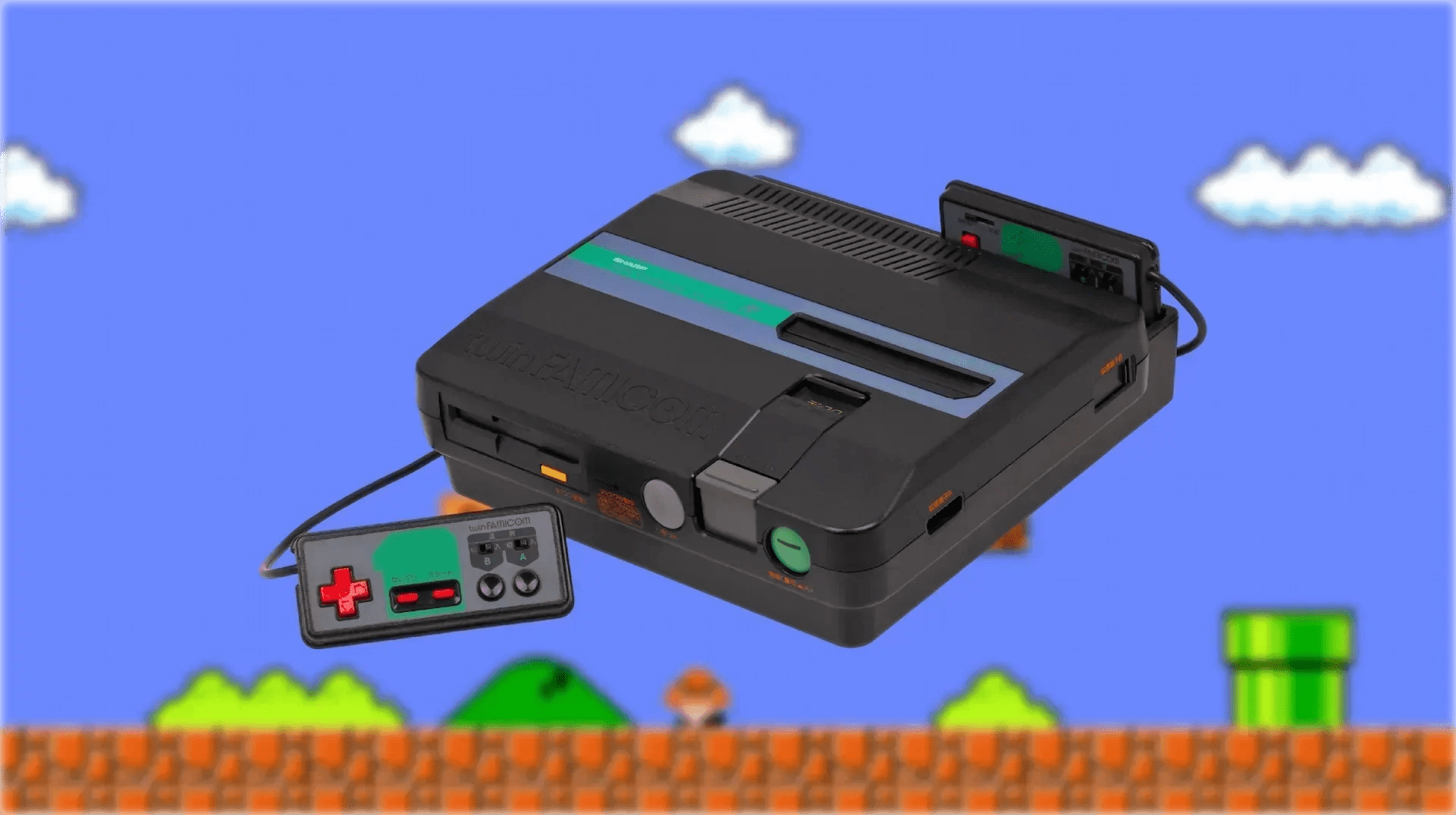
The Sharp Nintendo Twin Famicom stands out in Japanese retro gaming history as one of the most unusual retro video game consoles ever released.
Combining the original Famicom with the Famicom Disk System in one sleek unit, it’s a rare gaming console that continues to fascinate collectors in 2018. For fans of Japanese retro consoles, the Twin Famicom represents innovation, scarcity, and nostalgic charm.
A bold collaboration between Sharp and Nintendo
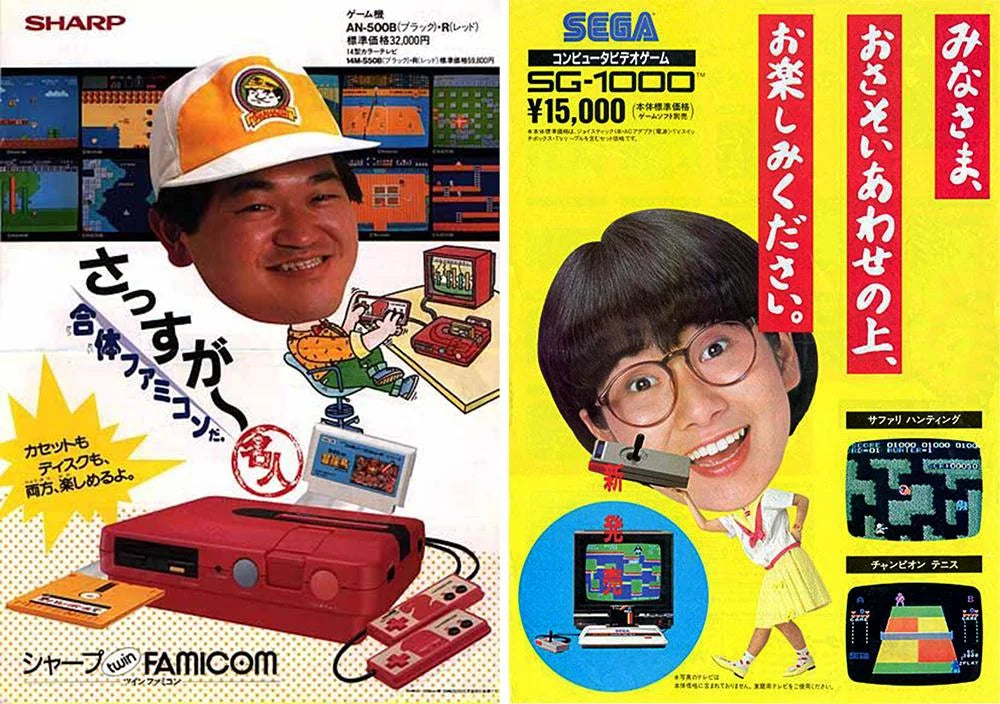
In the mid-1980s, Nintendo dominated the Japanese gaming landscape with the Famicom and its Disk System add-on. Sharp, already producing licensed Nintendo televisions with built-in consoles, partnered again with Nintendo to release a hybrid: the Twin Famicom. This single unit housed both the cartridge slot and disk drive, making it a convenient and futuristic solution for gamers at the time.
For collectors today, that collaboration means the Twin Famicom is more than just hardware. It’s a conversation piece — proof of how experimentation shaped the classic gaming systems era.
Design and variations collectors chase
The Twin Famicom was released in four striking color variations, from bold red-and-black to sleek black-and-red. Each feels distinct, and Japanese collectors often regard them as mini time capsules of 1980s design. Unlike standard Famicoms, these hybrids are heavier, chunkier, and feature the integrated Disk System drive.
Finding one in brand new and sealed (S-grade) condition is nearly impossible, which is why most collector chatter revolves around mint, complete-in-box (A-grade) examples. These condition distinctions are critical, shaping both the prestige and price of every Twin Famicom that surfaces in collector markets.

Why the Twin Famicom matters in 2018
In an era dominated by mini reissues and plug-and-play systems, the Twin Famicom reminds us of a different type of innovation: not shrinking down the past, but building it up into something new. Its legacy is tied to Japanese exclusivity, which has kept the system in demand among enthusiasts seeking Japan-only consoles.
For modern collectors, the Twin Famicom is often a “grail” target. It’s less common than a standard Famicom and far more stylish, which cements its reputation as one of the most nostalgic gaming consoles of the 1980s.
The collector’s market and rarity
Prices in 2018 reflect scarcity. A working Twin Famicom in fair condition can trade for hundreds of dollars, while high-grade examples climb much higher. Japanese models were never officially exported, so demand outside Japan has only grown over time. With many units suffering disk drive belt issues, fully functional examples are especially prized.
For collectors who prioritize authenticity and preservation, the Twin Famicom has become a statement piece. Its unique hybrid design ensures it’s recognized instantly in any lineup of retro collectibles.

Cultural footprint in Japan
Beyond rarity, the Twin Famicom symbolizes the experimental streak that defined the Japanese gaming industry in the 1980s. It’s not just a piece of hardware — it’s a cultural artifact. When Japanese players saw Sharp and Nintendo combine their strengths, it demonstrated how gaming could push beyond modular add-ons into all-in-one experiences.
Even today, its angular design and bright colors make it stand out in any collection photo. Enthusiasts describe it as the perfect representation of Japanese retro gaming culture: bold, unconventional, and collectible.
Legacy for collectors
The Sharp Nintendo Twin Famicom remains one of the most iconic rare consoles from Japan. For those building serious collections, it’s a touchstone — part conversation starter, part design marvel, part functional hybrid. Whether displayed in a glass cabinet or actually powered on for late-night Disk System adventures, the Twin Famicom is proof that even in 2018, the past still feels alive. For collectors curious about other hybrid systems, revisit our feature on the PC Engine/TurboGrafx Collectors’ Obsession to see how Japan shaped some of the most distinctive consoles of all time.
Share:
Tokyo Game Show 2018 - Retro Highlights
RetroPixl 2018 Year in Review