
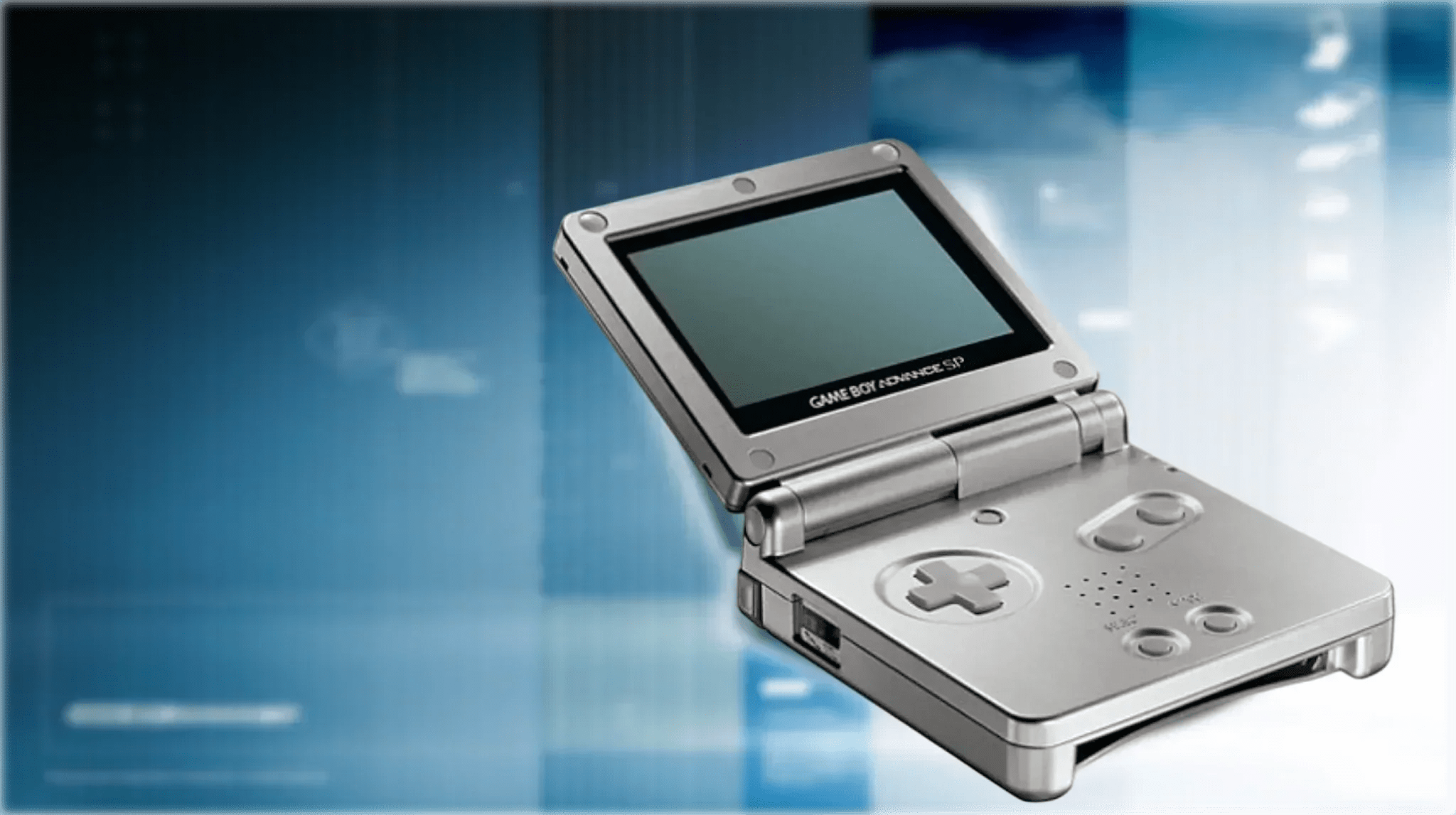
A compact revolution
When the Game Boy Advance SP launched in 2003, it redefined handheld gaming. Nintendo transformed the successful GBA into a sleek clamshell console with a rechargeable battery and illuminated screen; a major step toward modern portable design. Two decades later, the SP has evolved from travel companion to centerpiece in Japanese retro gaming collections.
Design that defined portability
The SP’s foldable shell wasn’t just practical; it protected the screen and made the system feel premium. Metallic finishes such as Pearl Blue, Graphite Black, and Flame Red added a refined edge that appealed to older fans as well as children. Its sturdy build and minimalist layout remain admired across Retro Handhelds circles for capturing a timeless sense of style.

The SP’s metallic look and compact hinge made it a design icon among retro handhelds.
Technical refinement
Inside, Nintendo improved everything. The rechargeable lithium-ion battery delivered up to ten hours of front-lit play, while the later AGS-101 model introduced a bright backlit screen with richer colors. Combined with stereo sound and backward compatibility, the SP became the perfect link between the classic Famicom spirit and early-2000s innovation.
Japanese limited editions
Japan received the most exclusive SP variants. The Famicom Color edition celebrated Nintendo’s roots with red-and-gold styling, while the Tribal Edition showcased engraved patterns. Pokémon Center exclusives, like the yellow Pikachu SP, featured themed packaging that now commands attention in the Collectors Collection. These special models illustrate how Nintendo turned handhelds into works of art rather than simple gadgets.

Japan-only models showcase Nintendo’s sense of heritage and collector appeal
Collector conditions and craftsmanship
SP consoles age remarkably well thanks to durable hinges and coated shells. Many units still close tightly and display vibrant screens. Collectors prize examples found brand new and sealed (S-grade), mint (A-grade), or complete-in-box (B-grade); though even used units hold value due to lasting build quality. For many, the SP’s precision design captures Nintendo’s golden era of handheld engineering.
Market value in 2021
In Japan, standard SP units typically sold between ¥7,000 and ¥10,000 in 2021, while limited editions and the AGS-101 model fetched several times more. Condition and variant remain key price drivers. Collectors continue tracking trends through the Retro Gaming Collection, where sealed and mint units consistently rank among the top-appreciating handhelds of the early 2000s.
Display and preservation
Collectors display the SP as both technology and art. Acrylic cases and stands protect metallic finishes from fading, while accessories such as chargers, manuals, and pouches add visual harmony to full sets featured in the Accessories category. Presentation has become part of the hobby, elevating the SP from nostalgia to design statement.
Cultural legacy
The Game Boy Advance SP symbolizes the bridge between old-school craftsmanship and modern portability. It marked Nintendo’s shift toward premium materials and minimalist design while retaining the playful identity that defined its legacy. Collectors place it alongside the Game Boy Light and PC Engine GT within RetroPixl’s Retro Handhelds line, recognizing it as a milestone in Japan’s portable-hardware history.
Legacy for collectors
Nearly twenty years on, the Game Boy Advance SP remains a masterpiece of design and engineering. Whether appreciated for its durability, display, or nostalgia, it embodies an era when hardware was built to last and look beautiful doing it.
To explore other handheld systems and limited editions from the same generation, visit the Retro Handhelds or Collectors collections for more legendary pieces that defined portable gaming excellence.
Share:
Sega Saturn 3D Controller: The Accessory That Shaped Future Consoles
Why Japanese Exclusives Are Pricier