
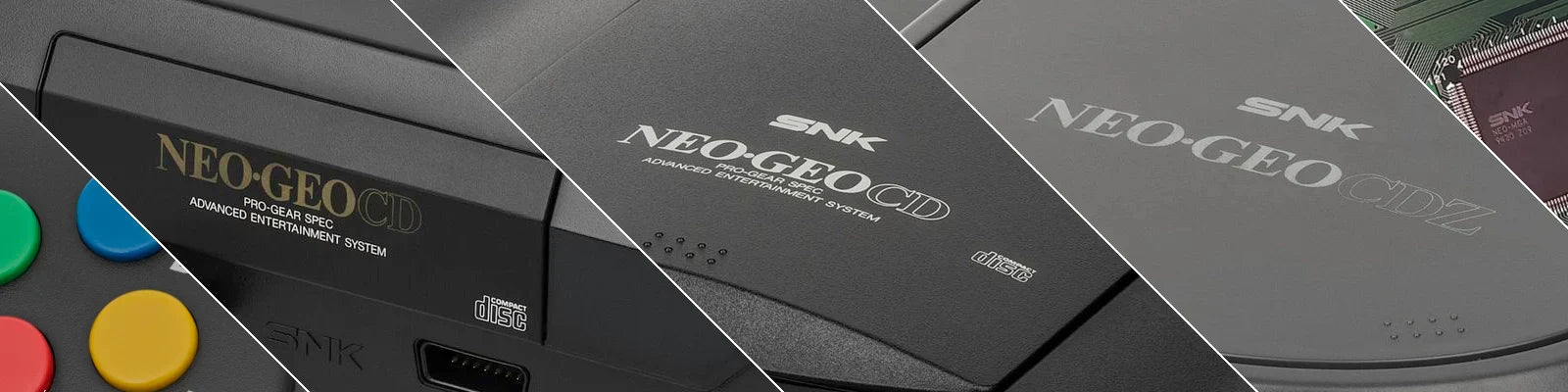
Among hardcore retro gamers and collectors, few consoles carry the mystique of the Neo Geo CDZ. Released exclusively in Japan in 1996, the CDZ was SNK’s final attempt to make its CD-based home console more practical.
While its predecessor, the Neo Geo CD, struggled with painfully long load times, the CDZ introduced a faster double-speed drive to address the issue. The improvement was noticeable, but production numbers were low, and the system was discontinued almost as quickly as it appeared. That combination of technical refinement and extreme scarcity has made the CDZ one of the most desirable consoles in retro gaming.
A Console Born to Fix Its Own Legacy
The Neo Geo CD, launched in 1994, was meant to be a more affordable alternative to SNK’s Neo Geo AES — a system famous for arcade-perfect games but equally infamous for sky-high cartridge prices. The idea was simple: swap expensive cartridges for cheaper CD-ROMs. While it made the games accessible, the trade-off was brutal: load times often stretched into minutes. For fast-paced fighters like Samurai Shodown II or The King of Fighters ’95, this was a huge flaw.
Enter the Neo Geo CDZ. With its upgraded double-speed CD-ROM drive, it drastically reduced loading times. Matches that once tested players’ patience became smoother experiences. Although it didn’t eliminate waiting entirely, it made the console far more playable.
Why It’s So Rare
Despite the technical improvements, the CDZ suffered from timing. By 1996, SNK was facing financial troubles, and competition from the Sony PlayStation and Sega Saturn was overwhelming. Production of the CDZ was limited to Japan, and even there, only a small number of units were released before SNK shifted its focus away from the platform. Unlike the AES or the MVS, the CDZ never had the chance to spread globally.
This short production run is the main reason the system is so rare today. Unlike other consoles of the era, which shipped in the millions, the CDZ is believed to have sold only in the tens of thousands, at most. That makes every surviving unit precious — and mint or brand new and sealed examples almost impossible to find.
Collector Value Today
For collectors, the CDZ is a holy grail. Loose units sometimes sell in the $300–500 range, depending on condition. Mint boxed examples easily cross the $800–1,200 mark, and when brand new, "S" grade sealed units appear, they command staggering prices, sometimes pushing beyond $2,000. Part of this value is tied to its scarcity, but another part comes from what it represents: the last evolution of SNK’s Neo Geo CD line.
It’s not just a collectible; it’s a piece of gaming history. Owning a CDZ is owning SNK’s final word on its CD experiment — a console that dared to fix what came before, but arrived too late to succeed

Why Collectors Love It
Beyond its rarity, the CDZ appeals to collectors because it embodies SNK’s DNA. The console is deeply tied to the golden age of 2D fighters. Titles like King of Fighters ’96, Samurai Shodown IV, and Metal Slug feel right at home on the hardware. For many collectors, the CDZ isn’t just about playing games; it’s about owning a piece of the 1990s arcade experience, condensed into a sleek console that never left Japan.
The design also makes it a standout. Compact and rounded, the CDZ is smaller and more stylish than the original front-loading Neo Geo CD. Its aesthetic alone makes it a centerpiece for any retro gaming shelf.
The Legacy of the CDZ
Though it never achieved mass success, the Neo Geo CDZ has carved out a reputation that far exceeds its production numbers. For retro gaming enthusiasts, it represents the passion and risk-taking of a company that built games and hardware for fans, not just for mass market appeal. Its exclusivity to Japan, limited production, and connection to SNK’s legendary franchises have all cemented its status as one of the most collectible consoles of the 1990s.
Owning a CDZ is like holding a piece of “what could have been” in gaming history — a reminder that even flawed systems can become legends when paired with rarity, nostalgia, and SNK’s unmatched arcade spirit.
Share:
Why the Super Famicom Still Captivates Gamers
Game Boy Camera: Nintendo’s Quirkiest Accessory