
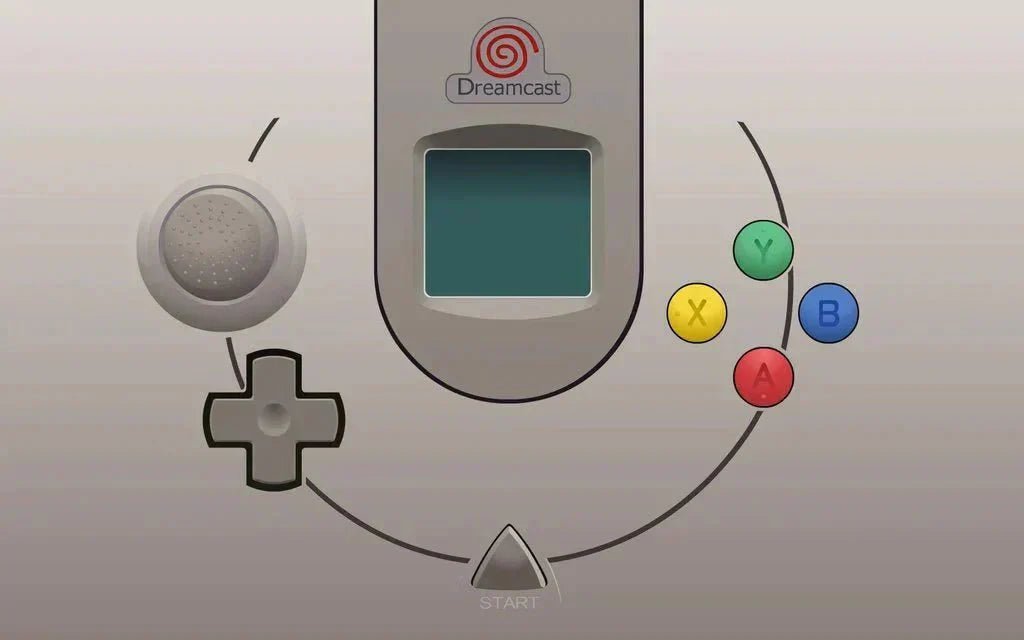
More than just a memory card
When Sega released the Dreamcast in 1998, it came with one of the most unique accessories in gaming history: the Visual Memory Unit (VMU). More than a simple save card, the VMU added a layer of creativity and interactivity that made it stand out among retro gaming accessories. For fans of retro gaming, it remains one of the most iconic innovations of the era.
A screen inside your controller

Perhaps the VMU’s most memorable feature was its ability to detach from the Dreamcast controller and function as a miniature handheld console in its own right. Instead of being just a passive memory card, it suddenly became an active gaming device. Players could download special mini-games, called “Chao Adventures” in Sonic Adventure or football drills in NFL 2K, and take them on the go. These weren’t just novelty extras — they gave players a reason to engage with their games beyond the living room, training characters, unlocking bonuses, or earning items that could be transferred back into the main game.
This clever feature meant the VMU blurred the line between accessory and console. It created a portable experience years before handheld connectivity became common, making it an early ancestor of today’s cross-platform and second-screen gaming. In an era where Game Boy still dominated the handheld space, the VMU showed that even a “memory card” could be playful, interactive, and forward-thinking. For collectors of retro handhelds, this portability is part of why the VMU remains such a fascinating piece of Sega history.
Mini-games and portability
Perhaps the VMU’s most memorable feature was its ability to detach and act as a mini-handheld. Players could download mini-games from titles like Sonic Adventure and play them on the go. This made the VMU an early ancestor of today’s cross-platform portability, blending the worlds of retro handhelds and home consoles.
Collectibility today
For collectors, the VMU is a reminder of Sega’s bold experimentation. Beyond the standard white version, Sega released a range of colors and limited editions in Japan — from translucent green to branded variants tied to specific games. These Japan-exclusive editions are prized as rare gaming collectibles, often fetching high prices when boxed and in mint condition consoles.

Why the VMU still matters
The VMU captured the spirit of Sega: playful, innovative, and always ahead of its time. While its battery life and tiny screen limited its mainstream adoption, it left a lasting impression on players and paved the way for future accessories that merged functionality with fun.
To discover more unique innovations, explore our Accessories collection. Or step back and compare it with Nintendo’s quirky innovations, like the Game Boy Camera’s Quirky Appeal (Nov 2016).
Share:
Retro Game Prices Spike Worldwide
Pokémon collectibles in the late 90s