
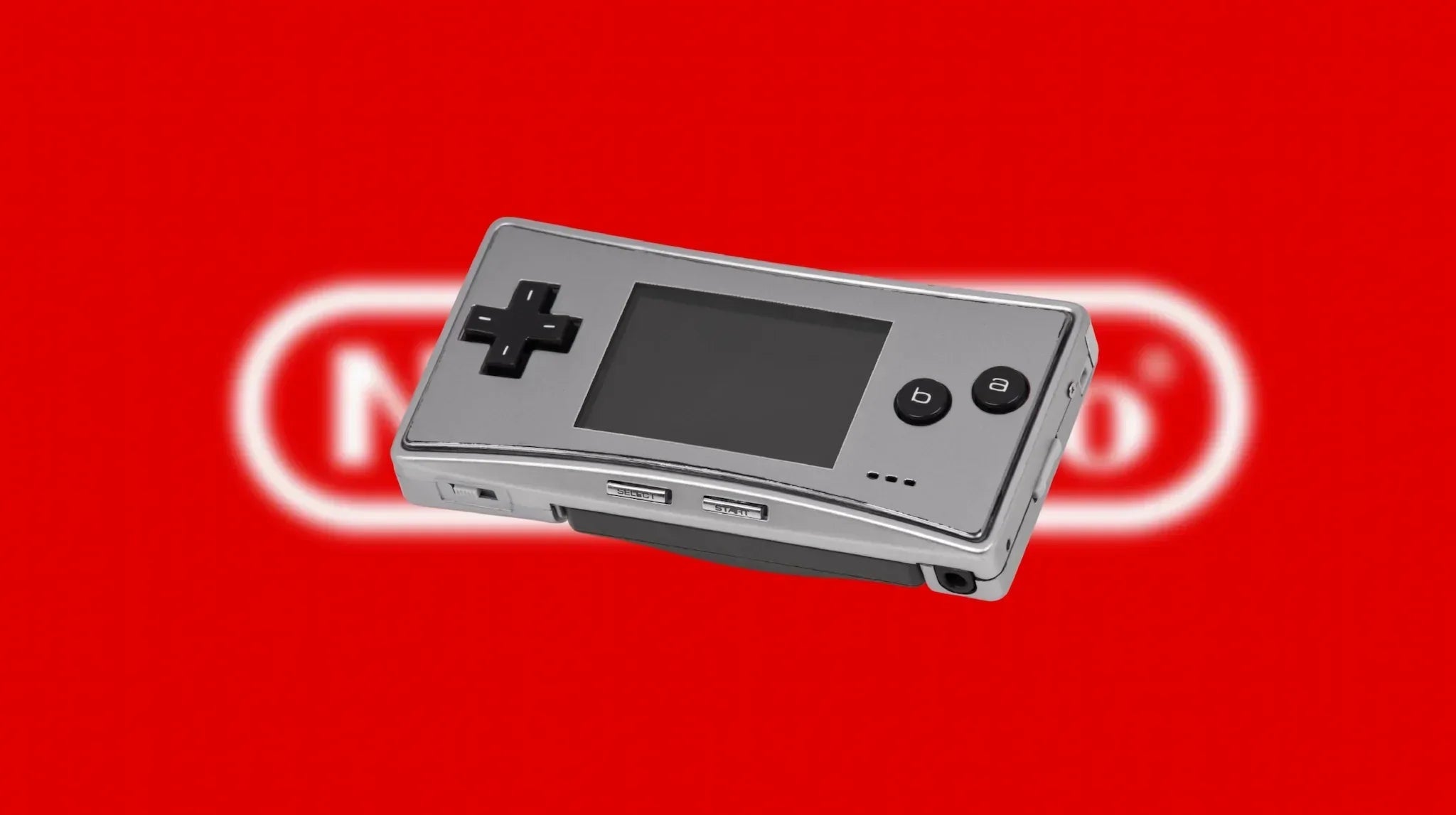
The smallest console with the biggest comeback
When Nintendo launched the Game Boy Micro in 2005, it arrived quietly near the end of the Game Boy line. Many dismissed it as a novelty, too small, too late. Yet nearly two decades later, this miniature console has earned cult status. Collectors now view it as one of Nintendo’s boldest design statements, a celebration of portability distilled to its purest form. For fans of Retro Gaming, it represents the perfect intersection of nostalgia and craftsmanship.
A masterclass in compact engineering
The Game Boy Micro was a feat of precision. At just ten centimeters wide, it fit comfortably in one hand while still delivering the full Game Boy Advance experience. Its crisp backlit screen, aluminum shell, and swappable faceplates turned it into both a gaming device and a design object. Nintendo’s decision to manufacture it in limited quantities gave it immediate rarity. Today, boxed A-grade or let alone S-grade units are among the most sought-after pieces in the Handhelds market.

The Famicom edition Micro remains one of the most elegant handheld designs ever created.
Japan’s unique influence
In Japan, the Game Boy Micro resonated deeply with design-conscious consumers. Its portability aligned perfectly with the minimalist lifestyles of Tokyo and Osaka, where efficiency and aesthetics often merge. Several Japan-only editions, such as the Mother 3 model and the Famitsu collaboration, became instant collector targets. These versions showcased not just color variations but cultural identity. They symbolized how Japan could transform functional hardware into objects of style.
From overlooked to overvalued
At launch, the Micro struggled commercially. Many players saw it as redundant next to the Nintendo DS. Over time, however, that commercial underperformance became part of its allure. The limited production run and premium build created scarcity. Collectors began to realize that what the public ignored had quietly become rare. The market for Micro units began to rise steadily, driven by collectors searching for mint boxes and matching serials.
Why collectors love it
Beyond rarity, the Game Boy Micro appeals because it feels personal. It was built to be carried, not stored, yet those who preserved it in pristine condition now own one of Nintendo’s most refined products. Its tactile buttons, metal texture, and weight all contribute to a sense of intentionality often missing from modern hardware. In the Collectors community, owning a complete Micro set, with box, charger, pouch, and manuals, is considered a mark of attention to detail.
 Final Fantasy and Even after twenty years, the Micro’s materials feel as premium as the day they were made.
The return of minimalist design
As gaming hardware grows larger and more complex, the Micro’s elegance feels increasingly relevant. Its focus on essentials anticipates modern trends toward portability and nostalgia. For collectors of Accessories and design-focused consoles, it stands as a reminder that small can be powerful when executed with purpose. The Micro’s resurgence proves that innovation does not always mean more, it can also mean less, done perfectly.
Final reflection
The Game Boy Micro’s journey from overlooked curiosity to coveted collectible captures what makes Japanese hardware culture unique. It celebrates precision, restraint, and emotional connection to design. For collectors, this tiny console embodies the art of doing more with less, a philosophy that continues to inspire the world of retro gaming.
Share:
The Evolution of Japanese Console Packaging
How Japan Redefined Limited Editions