
July 15, 1983: one day, two very different beginnings
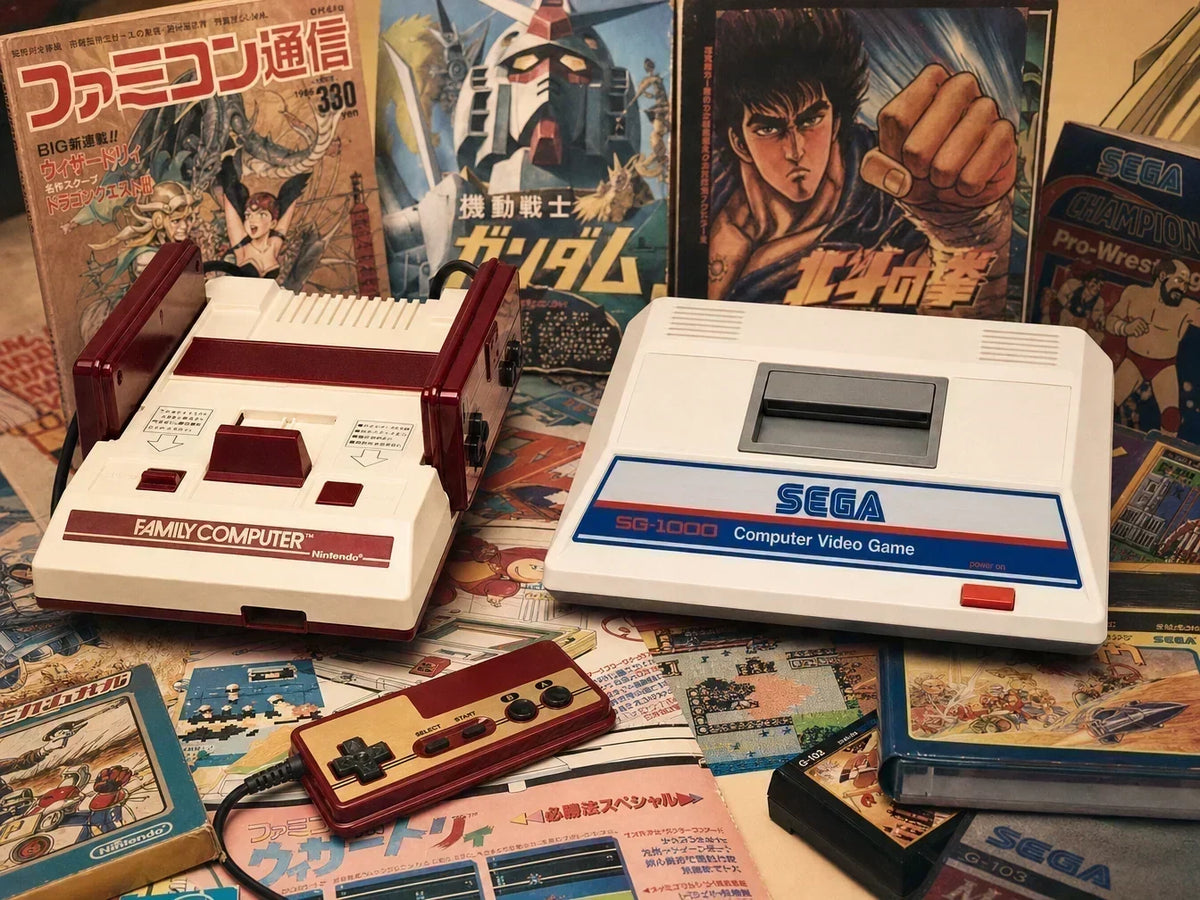
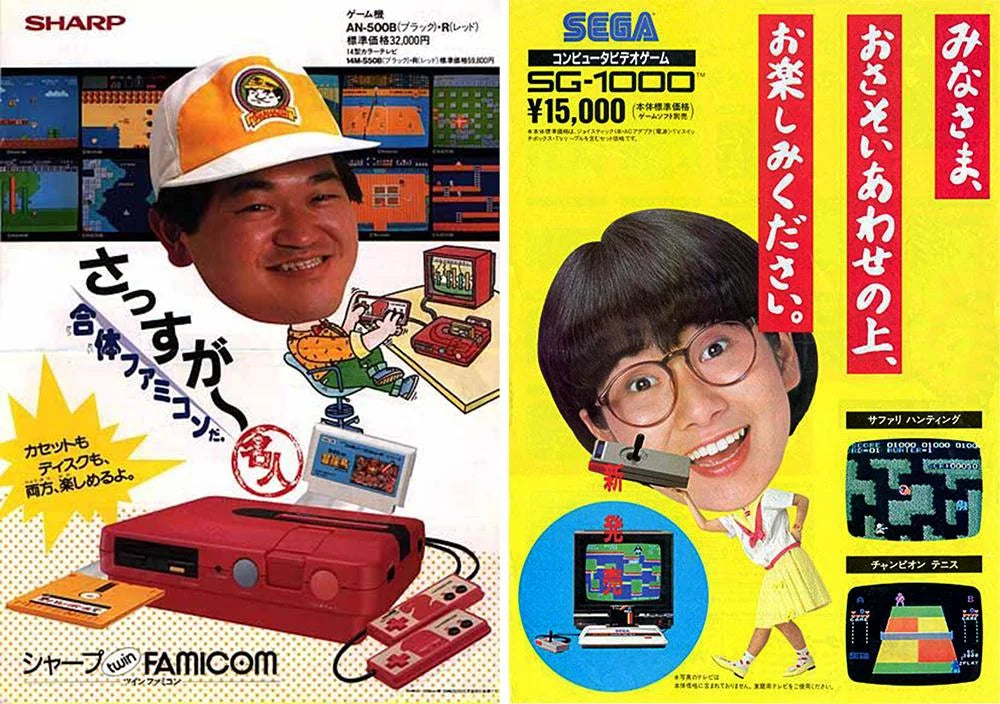
July 15 is a pretty special date in Japanese retro gaming. On this day in 1983, Nintendo launches the Family Computer, better known as the Famicom. On exactly the same day, Sega releases the SG-1000, its first home console. Two Japanese companies, two new systems, one shared birthday, and the beginning of stories that will shape gaming for decades.
Forty-three years later, both machines remain important parts of the history behind the Japanese consoles we celebrate in our Retro Gaming Collection.
Nintendo finds its formula with the Famicom

With its red and white shell, compact shape and permanently attached controllers, the Famicom immediately looks different from the electronics surrounding it. More importantly, Nintendo builds an ecosystem that grows far beyond the original machine.
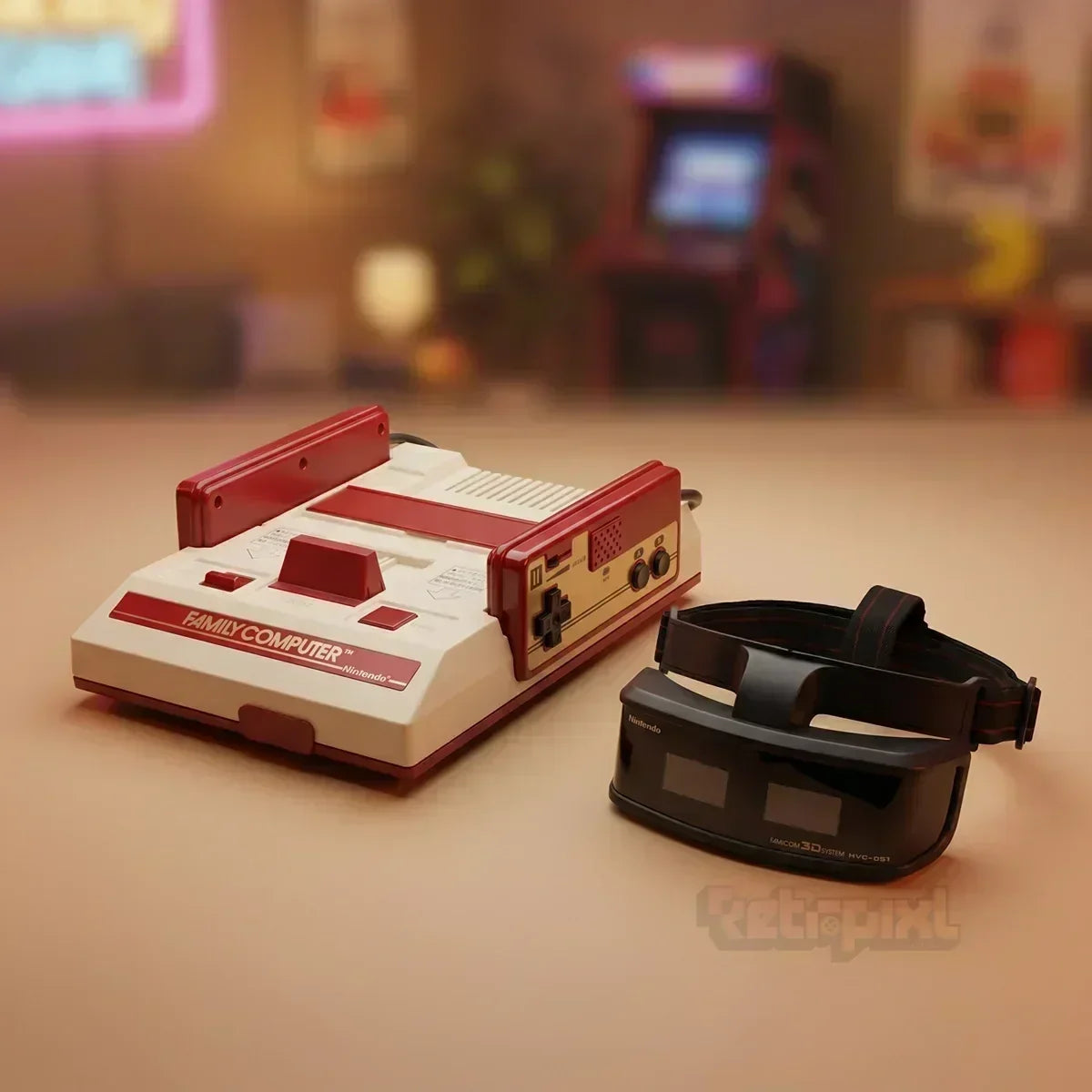
The console eventually travels overseas in redesigned form as the Nintendo Entertainment System, while Japan sees new peripherals and experiments such as the Famicom Disk System. Today, those consoles and variations remain central to the Retro Gaming Collection, where condition, packaging and original presentation can tell as much of the story as the machine itself.
Sega enters the home console race

Sega's SG-1000 follows a very different path. It evolves from Sega's SC-3000 computer project into the company's first dedicated home gaming console.
It never reaches the scale of the Famicom, but its importance is bigger than its sales suggest. The SG-1000 begins a lineage that moves through the SG-1000 II and Mark III, then into the Master System, Mega Drive, Saturn and eventually Dreamcast. The controllers and peripherals surrounding these systems also help create an increasingly diverse world of Japanese gaming Accessories.
The first chapter of Nintendo vs. Sega
Looking back, July 15, 1983 also feels like the opening chapter of one of gaming's most famous rivalries. The Famicom and SG-1000 are not yet fighting the "console war" most players remember, but Nintendo and Sega have now entered the Japanese home-console market side by side.
Over the following years, that competition grows through the NES and Master System before exploding with the Mega Drive and Super Famicom. By the 16-bit era, Nintendo versus Sega becomes one of the defining rivalries in gaming history.
The two companies take increasingly different approaches along the way. Nintendo builds around accessibility, recognizable characters and playful design, while Sega draws heavily from its arcade roots and a taste for experimentation. We explored some of those differences in our look at iconic Japanese console designs.
Why July 15 still matters to collectors
For collectors, these systems are more than early 1980s electronics. They represent the starting points of two companies whose consoles, characters and design choices become deeply embedded in gaming culture.
Original boxes, controllers, advertising, peripherals and other Collectibles or Accessories help preserve that wider history. And while the Famicom becomes an international icon, the SG-1000's more limited reach makes it a particularly interesting reminder that commercial success is not the only thing that gives a console historical importance.
Legacy for players and collectors.
It is hard to imagine a better snapshot of Japanese gaming history than July 15, 1983. Nintendo and Sega step onto the same starting line, share the same birthday and begin two very different journeys that eventually lead to one of gaming's greatest rivalries. Forty-three years later, the Famicom and SG-1000 still give players and collectors plenty of reasons to celebrate.
Share:
RetroPixl 2026: midyear review, plenty more to play
SEGA UNIVERSE POPUP STORE: classic Sega takes over Shibuya